
Table of Contents
- What Makes Durable T-Shirts Resistant to Stretching
- Heavyweight Cotton T-Shirts: The Foundation of Shape Retention
- How to Identify Quality T-Shirt Construction
- How to Wash T-Shirts to Prevent Stretching
- Top Durable T-Shirt Options That Hold Their Shape
- Fabric Blends vs. 100% Cotton: What Actually Prevents Stretching
- Conclusion
Last Updated: August 27, 2026
What Makes Durable T-Shirts Resistant to Stretching
Durable t-shirts that resist stretching share three key factors: fabric weight, fiber composition, and construction quality. Fabric density, measured in grams per square meter (GSM), directly determines resistance to stretching. According to ooShirts' 2026 textile durability analysis, mid-range options (150-180 GSM) balance breathability and durability, while heavier weights above 200 GSM last significantly longer.
Ring-spun cotton yarns create stronger threads than open-end alternatives. A 160 GSM ring-spun shirt can outlast a 180 GSM basic version because thread strength compensates for slightly lower density. Construction methods matter equally: double-needle stitching on sleeves and hems, taped seams, and reinforced necklines all contribute to shape retention. Rib-knit collars made with synthetic blends resist the stretching that occurs naturally when pulling the shirt over your head.
Heavyweight Cotton T-Shirts: The Foundation of Shape Retention
Heavyweight cotton forms the foundation of any durable t-shirt that resists stretching. A shirt constructed from 6.5 ounces or higher per yard squared will maintain its structure through repeated wear and washing cycles.
GSM and Fabric Density Explained
GSM measures fabric weight per square meter and serves as the primary indicator of durability. Lightweight shirts (under 150 GSM) lose their shape quickly. Mid-weight shirts (150-180 GSM) offer practical balance for everyday wear. Heavyweight shirts (200+ GSM) provide maximum durability and structural integrity.
Research indicates that most cotton t-shirts show significant deterioration after 50-75 wash cycles. Premium construction extends this to 75-100+ cycles, and proper care can extend lifespan by 30-40%. A shirt with 245-255 GSM, like the Shaka Wear Max Heavyweight option, represents the upper tier of durability. The trade-off with heavyweight fabric is breathability; denser weaves trap more body heat, making them less ideal for hot climates, but for everyday casual wear, durability favors heavier construction.
Ring-Spun vs. Open-End Cotton
Ring-spun cotton undergoes a more complex manufacturing process that aligns fibers along the yarn length, creating stronger yarn that resists pilling and breakdown. Open-end cotton uses a simpler process that produces shorter fibers packed less uniformly, breaking down faster under mechanical stress.
When comparing two shirts of identical weight, the ring-spun version will consistently outperform. Organic cotton t-shirts cost 20-30% more but deliver a 50% longer lifespan, according to EPIC FITS' analysis citing Cotton Incorporated. This premium reflects both the cost of organic farming and the quality of long-staple cotton varieties used in organic production.
How to Identify Quality T-Shirt Construction
Beyond fabric weight, construction quality separates durable t-shirts from disposable basics. Examining specific construction details takes less than a minute but predicts how a shirt will perform over years of wear.
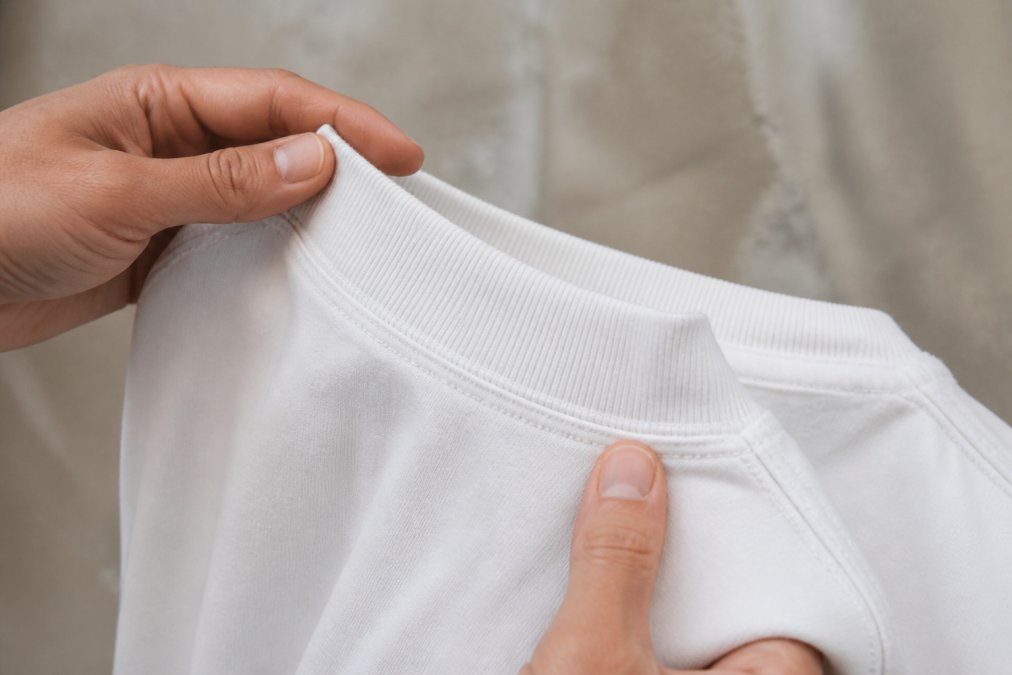
Collar and Ribbing: The First Stretch Points
The collar is where most t-shirts fail structurally. Rib-knit collars made with Lycra or spandex blends resist stretching because synthetic fibers have inherent elasticity and recovery. When stretched, they return to original dimensions rather than staying permanently deformed. ProClub Heavyweight Cotton T-Shirts use Lycra in their rib-knit collars, which is why they maintain a snug fit that doesn't sag after dozens of washes.
A taped collar, where reinforcement tape is sewn along the inside edge, provides additional support that prevents stretching. Shoulder-to-shoulder taping stabilizes the back of the garment and prevents stretching at the area where most stress concentrates during wear.
Seam Strength and Stitch Density
Double-needle stitching creates a stronger seam than single-needle construction because two parallel lines of thread distribute stress more evenly. Stitch density refers to the number of stitches per inch along a seam; a shirt with 12-15 stitches per inch will outlast one with 8-10 stitches per inch. Side-seamed construction minimizes twisting during wear and washing.
Preshrunk vs. Non-Preshrunk Fabric
Preshrunk fabric has been treated to prevent further shrinkage after purchase. The heat treatment actually strengthens cotton fibers by setting their structure, making fabric less likely to stretch. Garment-dyed t-shirts achieve preshrinking through the dyeing process itself, which heat-sets the fabric and minimizes both shrinkage and stretching.
How to Wash T-Shirts to Prevent Stretching
Even the most durable t-shirt will degrade faster with improper care. Washing and drying methods determine whether a shirt maintains its shape or begins sagging within the first season.
Water Temperature and Wash Cycle Selection
Cold water washing preserves fabric integrity while still removing dirt and oils effectively. According to the Dry-Cleaning and Laundry Institute's 2025 guidelines, proper care significantly extends garment lifespan. A gentle or normal cycle with cold water provides the best balance between cleaning effectiveness and durability.
Washing frequency impacts durability significantly. Wearing a shirt 2-3 times before washing extends its lifespan by 30-40% compared to washing after every wear. A typical casual t-shirt worn weekly lasts 1-3 years with regular washing, but spacing washes further apart extends this considerably.
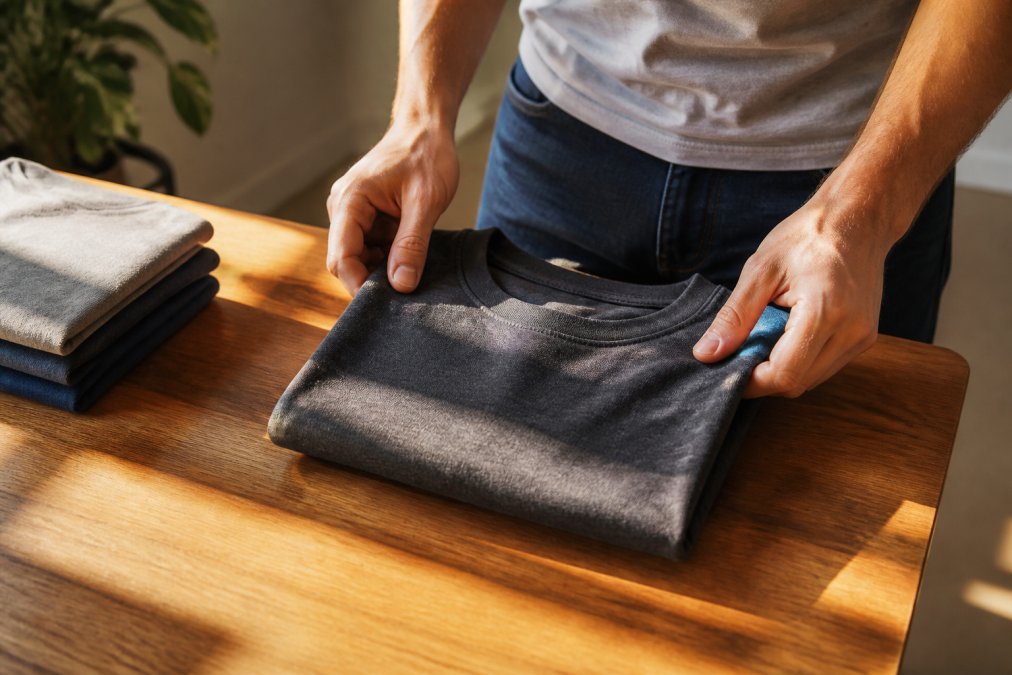
Drying Methods That Preserve Shape
Machine drying applies heat that can degrade cotton fibers and cause stretching. Air drying preserves shape better than any other method. Lay the shirt flat on a clean surface or hang it on a clothesline with even tension. If machine drying is necessary, use the lowest heat setting available and remove the shirt while slightly damp.
Storage and Handling Between Wears
Folding preserves shape better than hanging for t-shirts. Hanging stretches the shoulder seams under the shirt's own weight. Use wide, padded hangers if hanging is necessary. Store t-shirts in a cool, dry location away from direct sunlight and heat sources.
Top Durable T-Shirt Options That Hold Their Shape
1. Poppabear Tees &Stuff, Best Premium Everyday Wear
Poppabear Tees &Stuff offers a carefully curated selection of apparel designed to blend modern trends with lasting quality. Our collection focuses on providing durable t-shirts that maintain their structure through repeated wear and washing. Each piece undergoes evaluation for fabric weight, seam strength, and collar construction.
Style and durability aren't mutually exclusive; you can look great while knowing your shirt will last. These aren't just work shirts or athletic wear, they're pieces that transition seamlessly from casual weekends to professional settings. The fabrics we choose resist pilling and fading while maintaining structural integrity through regular wear.
Pros:
- Carefully curated for quality and durability
- Blends modern trends with lasting construction
- Versatile pieces suitable for multiple occasions
Cons:
- Pricing depends on quantity, dates, and delivery. Please visit our website for current prices.
- Limited inventory compared to major retailers
2. Carhartt K87 Pocket T-Shirt, Best Heavyweight Workwear Choice
Carhartt's K87 represents the workwear standard for durable t-shirts. Made from 6.75-ounce, 100% cotton jersey knit, this shirt prioritizes durability for demanding work environments. The rib-knit crewneck holds its shape through years of heavy use, and the side-seamed construction minimizes twisting during wear and washing.
The pocket detail adds functionality without compromising durability. A sewn-on Carhartt label reinforces the pocket opening, preventing stretching at this stress point. This option excels for anyone prioritizing durability over fashion.
Pros:
- Legendary durability from a trusted workwear brand
- 6.75-ounce heavyweight fabric resists stretching
- Rib-knit collar maintains shape over time
- Loose fit provides excellent mobility
Cons:
- Some colors are cotton/polyester blends
- Utilitarian styling may not suit fashion-focused preferences
Price Range: $19.99-$24.99
3. Shaka Wear Max Heavyweight T-Shirt, Best Maximum Durability Pick
At 7.5 ounces (245-255 GSM), Shaka Wear Max represents the heaviest option available for durable t-shirts. The 2% Lycra neck rib creates a stretch-proof neck that won't sag. Double-needle stitching throughout reinforces every seam, and the quarter-turned design eliminates the center crease that can weaken fabric integrity.
This shirt prioritizes longevity above all other considerations. Shaka Wear's focus on durability appeals to custom apparel businesses and individuals who wear the same shirt repeatedly.
Pros:
- Extremely heavy and dense fabric (245-255 GSM) for maximum durability
- Stretch-proof Lycra rib collar maintains shape indefinitely
- Double-needle stitching throughout provides rugged durability
Cons:
- Oversized fit may not appeal to all preferences
- Limited color availability on some retail sites
Price Range: $6.37-$16.90
4. Gildan Ultra Cotton 2000 T-Shirt, Best Budget-Friendly Durable Option
Gildan Ultra Cotton proves that durability doesn't require premium pricing. At 6.1 ounces of preshrunk 100% cotton, this shirt delivers exceptional value. The seamless double-needle 7/8" collar resists stretching, and the taped neck and shoulders provide reinforcement that prevents neckline deformation. The quarter-turned construction eliminates the center crease, and double-needle hemming provides consistent durability.
What makes Gildan Ultra Cotton remarkable is the durability-to-price ratio. The heavyweight fabric and reinforced seams perform far better than the price point suggests. This is the choice for anyone skeptical that durability requires significant investment.
Pros:
- Excellent value for the price, especially in bulk
- Heavyweight fabric offers good durability
- Preshrunk cotton minimizes shrinkage after washing
- Taped neck and shoulders for enhanced durability
Cons:
- Fit can be boxy for some body types
- Some colors are cotton/polyester blends
Price Range: $5.19-$10.89
5. ProClub Heavyweight Cotton T-Shirt, Best for Shape Retention
ProClub's reputation centers on their ribbed knit collar made with Lycra. This hybrid approach combines 100% USA cotton fabric with synthetic collar reinforcement, creating a shirt that maintains its shape indefinitely. Double-needle stitching on sleeves and bottom hem, combined with coverseamed neck and shoulder-to-shoulder tape, addresses every stress point.
The classic tight crew neck sits snug around the neck and resists the stretching that occurs with looser collar designs. At 6.5 ounces, the fabric weight provides substantial durability without being as heavy as ultra-heavyweight options. ProClub shirts are often favored by construction workers and urban professionals who need reliable basics.
Pros:
- Ribbed collar with Lycra provides excellent shape retention
- Double-needle stitching throughout ensures durability
- Solid heavyweight fabric feels substantial
- Legendary reputation for maintaining shape over time
Cons:
- Some colors are cotton/polyester blends
- Tight crew neck may feel snug for some preferences
Price Range: $6.00-$10.34
Fabric Blends vs. 100% Cotton: What Actually Prevents Stretching
The debate between pure cotton and blended fabrics reveals a surprising truth: price and material purity don't determine durability. A well-constructed 50/50 cotton-polyester blend can outlast a poorly made 100% cotton shirt. What matters is the overall construction approach.
Synthetic fibers like polyester and spandex improve shape retention because they have inherent elasticity and recovery. However, stretch fabrics present trade-offs. They can feel less breathable and are difficult to recycle due to their plastic content. Some consumers reject stretch shirts because they don't feel premium or develop character like pure cotton.
The practical solution: focus on construction quality rather than material purity. A 100% cotton shirt with heavyweight fabric, quality yarn, and reinforced seams will maintain shape better than a stretchy blend with poor construction. Evaluate the complete package rather than fixating on a single characteristic.
| Option | Stretching Tendency | Recovery | Durability | Best For |
|---|---|---|---|---|
| 100% heavyweight cotton | Low | Slow | Excellent | Premium basics, workwear |
| Cotton with Lycra collar | Very low | Excellent | Excellent | Shape-critical wear |
| 50/50 cotton-polyester | Low | Good | Very good | Budget durability |
| Cotton with spandex blend | Moderate | Excellent | Good | Athletic or fitted wear |
The most durable t-shirts that do not stretch share a consistent pattern: heavyweight fabric, quality construction, and reinforced stress points. A $15 Gildan Ultra Cotton with proper care will outlast a $50 fashion brand shirt with poor construction.
Your wardrobe foundation deserves investment in pieces that actually last. At Poppabear Tees &Stuff, we believe durable basics elevate your everyday style without constant replacement cycles. Explore our carefully curated collection of quality apparel designed to blend modern trends with lasting durability. Look and feel your best every day with pieces built to last. EXPLORE NOW
=== FAQ ANSWERS (audit these too, same rules) ===
[1] Q: What fabric prevents t-shirts from stretching out? A: Heavyweight cotton fabrics with high GSM (grams per square meter) resist stretching better than lightweight options. Fabric density directly affects durability, mid-range options at 150-180 GSM balance breathability and durability, while heavier weights above 200 GSM last significantly longer. Ring-spun or combed cotton yarns create stronger threads, meaning a 160 GSM ring-spun shirt can outlast a 180 GSM basic version. Preshrunk fabric also minimizes shrinkage and helps maintain consistent sizing across multiple washes.
[2] Q: Are heavyweight cotton t-shirts more durable and resistant to stretching? A: Yes. The research shows that heavyweight cotton t-shirts resist stretching far better than lightweight alternatives. Premium construction with high stitch density and reinforced seams extends lifespan to 75-100+ cycles. Heavyweight fabric creates a more structured garment that maintains its original shape through repeated wear and washing, especially when combined with quality rib-knit collars and taped seams.
[3] Q: How do I keep my t-shirt collar from stretching? A: The collar is the first point of stretch failure. Look for t-shirts with high-ribbed collars reinforced with Lycra or spandex, these maintain tightness and shape over time. Double-needle stitching and shoulder-to-shoulder taping on the neck provide additional structural support. When washing, turn the shirt inside out and use cold water on a gentle cycle. Always air-dry or lay flat to dry rather than using a dryer, which accelerates fabric breakdown. Avoid pulling the collar over your head when removing the shirt; instead, pull from the sides or bottom hem.
[4] Q: What's the difference between preshrunk and durable t-shirts? A: Preshrunk fabric has been treated during manufacturing to minimize shrinkage after washing, so the garment maintains its original size and fit. Durability refers to how well the fabric and construction resist wear, stretching, pilling, and thinning over time. A preshrunk shirt may still stretch if the fabric weight is too light or the collar construction is weak. True durability combines preshrunk treatment with heavyweight fabric (6+ ounces), high stitch density, reinforced seams, and quality ribbing. Both properties matter, preshrinking keeps the fit consistent, while durability keeps the shirt looking new longer.
Frequently Asked Questions
What fabric prevents t-shirts from stretching out?
Heavyweight cotton fabrics with high GSM (grams per square meter) resist stretching better than lightweight options. Fabric density directly affects durability, mid-range options at 150-180 GSM balance breathability and durability, while heavier weights above 200 GSM last significantly longer. Ring-spun or combed cotton yarns create stronger threads, meaning a 160 GSM ring-spun shirt can outlast a 180 GSM basic version. Preshrunk fabric also minimizes shrinkage and helps maintain consistent sizing across multiple washes.
Are heavyweight cotton t-shirts more durable and resistant to stretching?
Yes. The research shows that heavyweight cotton t-shirts resist stretching far better than lightweight alternatives. Premium construction with high stitch density and reinforced seams extends lifespan to 75-100+ cycles. Heavyweight fabric creates a more structured garment that maintains its original shape through repeated wear and washing, especially when combined with quality rib-knit collars and taped seams.
How do I keep my t-shirt collar from stretching?
The collar is the first point of stretch failure. Look for t-shirts with high-ribbed collars reinforced with Lycra or spandex, these maintain tightness and shape over time. Double-needle stitching and shoulder-to-shoulder taping on the neck provide additional structural support. When washing, turn the shirt inside out and use cold water on a gentle cycle. Always air-dry or lay flat to dry rather than using a dryer, which accelerates fabric breakdown. Avoid pulling the collar over your head when removing the shirt; instead, pull from the sides or bottom hem.
What's the difference between preshrunk and durable t-shirts?
Preshrunk fabric has been treated during manufacturing to minimize shrinkage after washing, so the garment maintains its original size and fit. Durability refers to how well the fabric and construction resist wear, stretching, pilling, and thinning over time. A preshrunk shirt may still stretch if the fabric weight is too light or the collar construction is weak. True durability combines preshrunk treatment with heavyweight fabric (6+ ounces), high stitch density, reinforced seams, and quality ribbing. Both properties matter, preshrinking keeps the fit consistent, while durability keeps the shirt looking new longer.
This article was written using GrandRanker

